Tyson Expects Sales to Fall Up to 5.5% Even as Its Beef Business Targets a Turnaround
Tyson Foods projects fiscal 2027 sales will decline 3.5%–5.5%, yet it sees its troubled beef segment moving closer to break-even. Its latest results reveal why lower cattle volumes, non-GAAP adjustments and changing margins matter.
TickerCanvas Editorial ·
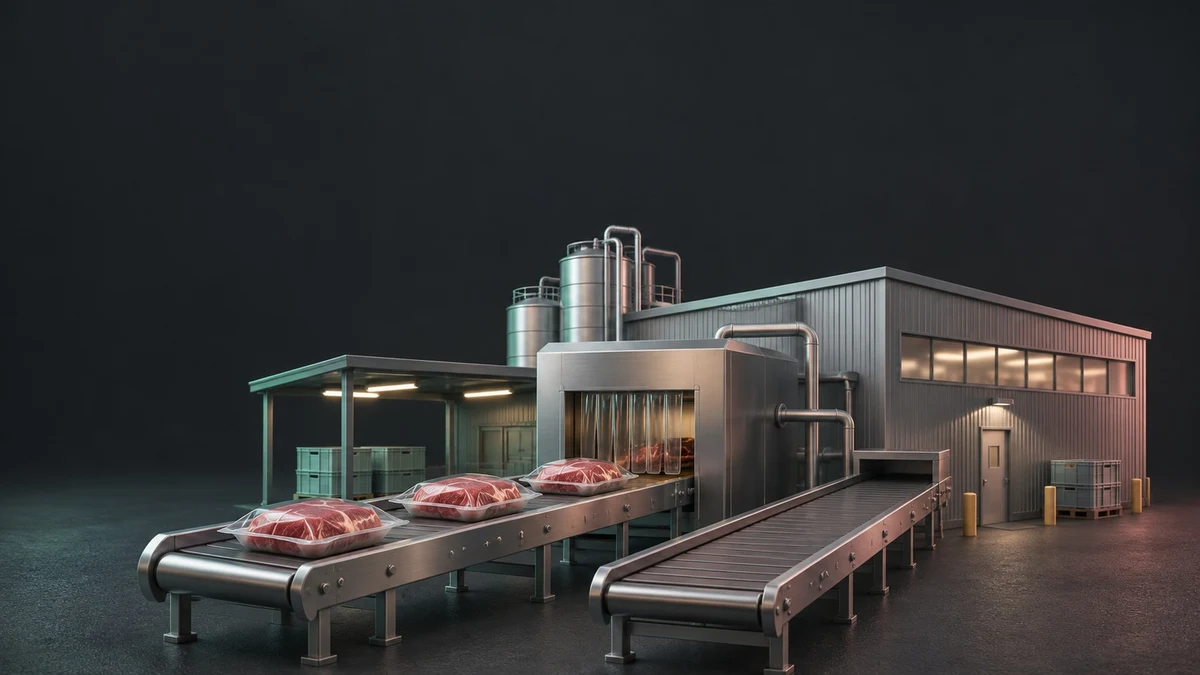
November 16, 2026. Tyson Foods is preparing to sell less in fiscal 2027 while aiming to lose substantially less money on beef. That contrast is the central message of its latest earnings report: a shrinking top line does not automatically mean every part of a business is deteriorating.
The S&P 500 food producer said it expects fiscal 2027 sales to decline 3.5% to 5.5%, primarily because of reduced beef-processing volumes following plant restructuring and tight U.S. cattle supplies. The forecast is a company projection, not a result already achieved.
Why the beef outlook matters more than the headline sales decline
Tyson's beef segment posted an adjusted operating loss of $654 million in fiscal 2026, compared with a $275 million adjusted loss in fiscal 2025. In the final quarter, the business lost $171 million on an adjusted operating basis, versus $52 million a year earlier. Its reported fourth-quarter operating loss was substantially wider at $514 million, reflecting the difference between GAAP-reported segment results and management's adjusted measure.
For fiscal 2027, however, Tyson projects beef segment adjusted operating performance between a $300 million loss and a $100 million profit. The wide range matters: it is a forecast of improvement, not a guarantee that beef will become profitable. Tyson also expects the chicken segment to produce between $1.3 billion and $1.6 billion of adjusted operating income, below its $1.859 billion fiscal 2026 result.
Quarterly revenue grew, but the comparison needs an extra week
Tyson reported $14.585 billion in fourth-quarter sales, up 5.2% from $13.860 billion a year earlier. On the same release, it reported a 4.0% decline in sales after excluding the effect of an additional reporting week and changes in legal-contingency accruals recorded as reductions to revenue. These two growth rates answer different questions; the 5.2% figure should not be presented as ordinary same-length-period growth.
Profit was also weaker than the headline revenue increase suggests. Tyson recorded a GAAP net loss attributable to the company of $74 million, or 22 cents per share, in the quarter, compared with a $47 million profit a year earlier. Adjusted earnings per share were 61 cents, versus $1.15 in the prior-year quarter. Companywide adjusted operating income fell to $361 million from $608 million, a decline of about 41%.
Fiscal 2026 contained 53 weeks, while fiscal 2027 contains 52. Tyson says its fiscal 2027 percentage-growth outlook uses fiscal 2026 adjusted to a comparable 52-week basis. Readers should therefore avoid applying the forecast decline mechanically to the unadjusted $56.419 billion of reported fiscal 2026 revenue.
What investors still need to see
Tyson expects total company adjusted operating income of $1.7 billion to $2.15 billion in fiscal 2027, versus $1.977 billion in fiscal 2026. That range allows both a decline and an increase. The company also cannot provide a full GAAP reconciliation of its forward adjusted outlook because certain future adjustments remain uncertain.
The key questions are whether tighter beef capacity can improve unit economics despite lower volumes, whether chicken and pork margins stabilize, and whether consumers continue absorbing higher meat prices. The results are relevant to the S&P 500's consumer-staples sector because they show how cost pressure and capacity decisions can pull sales and profit expectations in different directions.
Tyson Foods (NYSE: TSN) is a constituent of the S&P 500 and can be found alongside other index members on the TickerCanvas market canvas; its shared cached snapshots identify their market-data session dates rather than implying live prices.
By TickerCanvas Editorial.
Sources
Information and market context, not investment advice. Market data on the canvas is shared and cached; read its actual session timestamp.
Explore the S&P 500 canvas