Google Pairs Its Secure TPU System With AMD CPUs as Zen 6 EPYC Ships
AMD's sixth-generation EPYC server processors are now shipping, one day after Google disclosed that its new confidential-computing TPU system uses fifth-generation AMD CPUs. The distinction highlights the less-visible role of host processors in the AI boom.
TickerCanvas Editorial ·
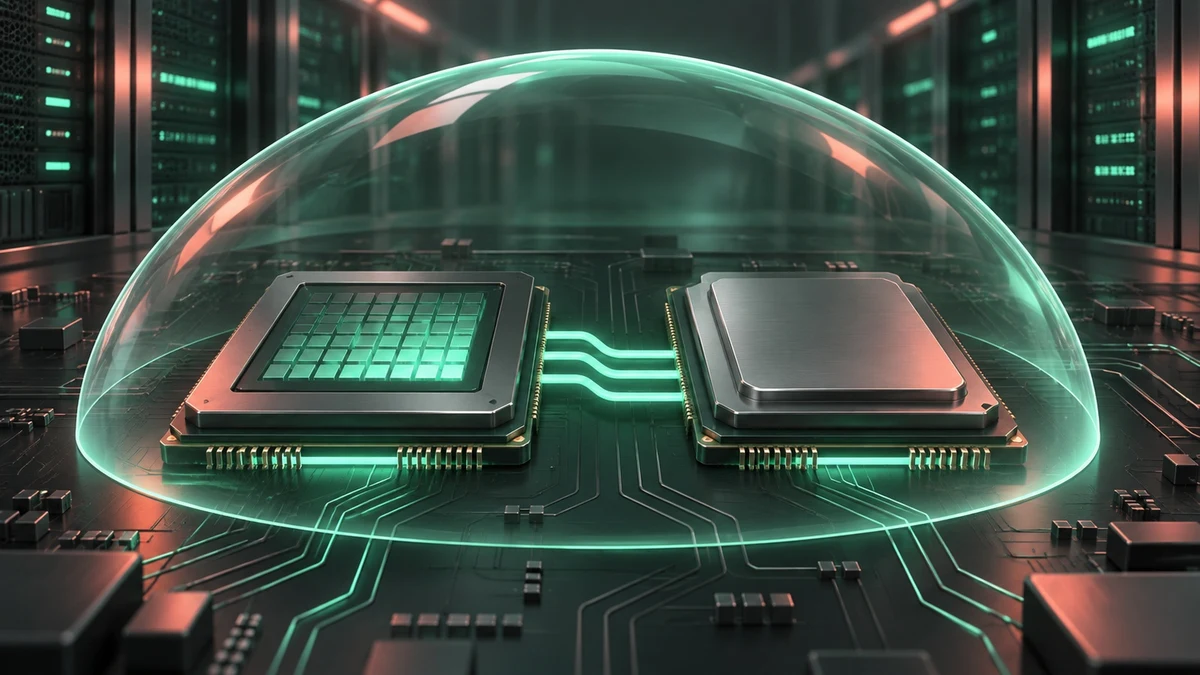
November 10, 2026. Advanced Micro Devices has moved its sixth-generation EPYC server processors into general availability, saying systems from major server manufacturers are shipping now. The announcement came one day after Google unveiled a new AI accelerator system with an AMD connection: the Google Cloud TPU 8tx uses fifth-generation EPYC processors as its host CPUs.
Those are two different product generations, not one combined launch. Together, they show why the AI infrastructure contest cannot be measured by graphics processors alone. Even a cloud company building its own AI accelerator still needs conventional processors to organize the work around it.
What AMD launched on November 10
AMD said its Zen 6-based, sixth-generation EPYC SP7 server processors are generally available, with hardware from original equipment and design manufacturers already shipping. The company said Microsoft Azure has sixth-generation EPYC-based offerings in preview and that cloud instances from Azure and Oracle Cloud Infrastructure are expected to become generally available soon. Those future cloud availability statements are not the same as a completed public rollout.
The product family targets enterprise computing and high-performance workloads as well as AI infrastructure. Host CPUs coordinate data movement, services and the software surrounding dedicated AI accelerators. AMD also published performance comparisons against competing server chips, but those are vendor-reported benchmarks, dependent on the selected workloads and test settings, not independent measurements of customer savings.
The surprising detail inside Google's new TPU system
On November 9, Google announced two additional configurations in its eighth-generation Tensor Processing Unit family. The TPU 8tx targets confidential AI inference and fine-tuning for users handling sensitive models or data; the TPU 8i Max is designed for more memory-intensive workloads and larger contexts. Google says the TPU 8tx pairs its own accelerator technology with fifth-generation AMD EPYC host processors—not the newly released sixth-generation chips.
Google describes the TPU 8tx as providing hardware-based protections for information being processed, addressing a problem that ordinary encryption at rest or in transit does not fully solve. According to Google's technical announcement, it uses the same underlying TPU silicon as TPU 8t but adds a secure system configuration. AMD says its EPYC processors handle tasks such as workload orchestration and data preparation while supporting that confidential-computing architecture.
Importantly, this is not a report that Google replaced its own TPUs with AMD graphics processors. The accelerator is Google's; AMD supplies the host CPU component of the 8tx system. Nor does Google's announcement establish that all new TPU configurations use AMD processors.
Why the S&P 500 should care
AMD (NASDAQ: AMD) and Alphabet (NASDAQ: GOOGL) are both S&P 500 constituents. Their announcements point to two complementary ways major index companies participate in AI infrastructure: Alphabet develops specialized accelerators and cloud services, while AMD supplies the processors needed to operate increasingly complex computing systems. The choice of AMD CPUs for Google's new secure configuration illustrates a route for server-CPU demand even when a customer designs its own AI chip.
That does not prove a near-term jump in earnings. Neither announcement specifies the financial value of the Google-AMD arrangement, 8tx shipment volumes, customer adoption or the revenue contribution attributable to the new sixth-generation EPYC processors. Google's performance figures and AMD's competitive claims also need to be distinguished from independently observed deployment results.
What to watch next
The practical tests will be the pace at which Zen 6 EPYC systems reach cloud and enterprise customers, whether Google's confidential TPU offering attracts regulated workloads, and how much of that demand turns into measurable revenue and margins. AMD's announcement establishes that server systems are shipping, while Google's announcement describes the new TPU configuration without disclosing broad customer rollout or a financial payoff.
By TickerCanvas Editorial
Sources
- AMD investor relations: 6th Gen EPYC general availability, November 10, 2026
- AMD investor relations: fifth-generation EPYC in Google Cloud TPU 8tx, November 9, 2026
- Google Cloud: TPU 8tx and TPU 8i Max technical announcement, November 9, 2026
- Reuters via Euronext: Google unveils two TPU configurations, November 9, 2026
- S&P Dow Jones Indices: S&P 500 index constituents reference
Information and market context, not investment advice. Market data on the canvas is shared and cached; read its actual session timestamp.
Explore the S&P 500 canvas